Google Maps Ranking: Why There Is No Single No.1
“Ranking number one on Google Maps” is not a measurable goal, because there is no single list for everyone. Here is the goal that is measurable.
In this article
Summarize with AI
Let us start honestly: there is no single "number one" spot on Google Maps.
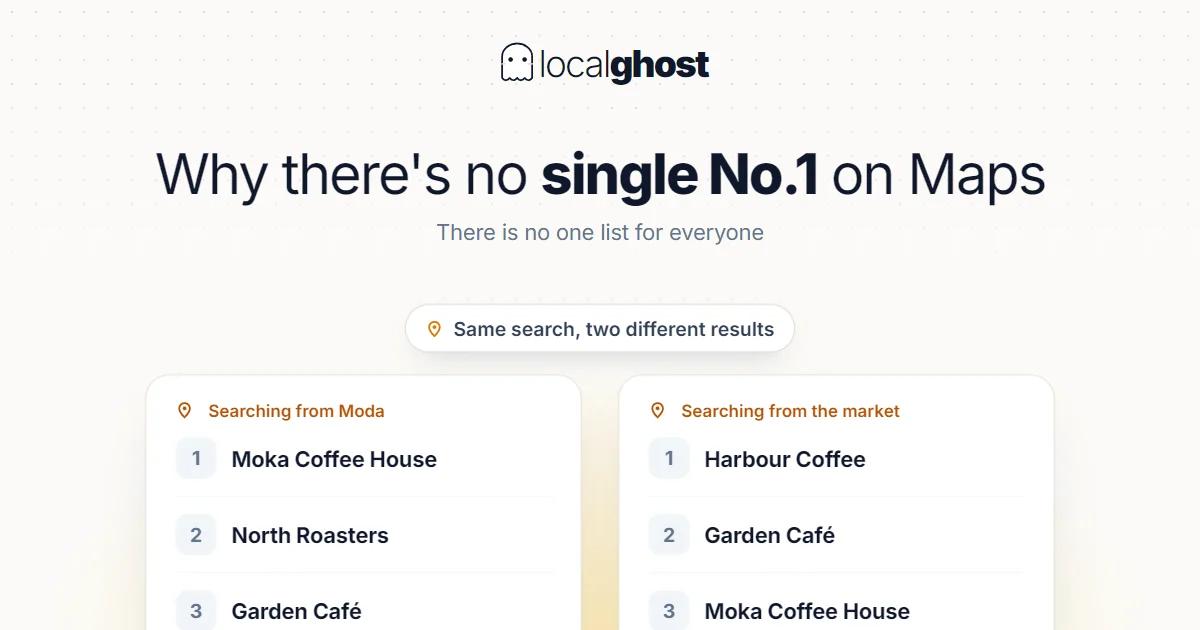
The reason is mechanical. The result block that arrives with a map is computed per query and according to the searcher's location. Two people standing on the same street can see different orders for the same search. A business ranking first at one end of a city may not appear at all at the other end.
So "get us to number one" does not define a measurable goal. A measurable goal is framed like this: increasing visibility for specific queries, from specific points, within a specific area.
Making that distinction is not wordplay; it determines where budget and effort go.
The three factors Google itself names
Google explicitly names three elements in how local results are determined, and knowing them saves you from speculation.
Relevance. How well the profile matches what was searched for. Category, service list and the completeness of profile information do the work here.
Distance. How far away you are from the searcher's location. This is the factor you control least — and the service area you declare on your profile does not change it.
Prominence. How well known the business is. Reviews, consistent information across the web, and other signals of how established you are.
The practical meaning of those three: you cannot change distance, so you work on relevance and prominence. All of local SEO happens inside those two columns.
For the general logic of the local pack: how the 3-pack works.
What genuinely works on the relevance side
Relevance is about making clear what the profile is, and the work here is concrete.
The primary category. The single highest-impact setting. Pick the narrowest accurate category that describes the body of your revenue. A wrong category caps every other effort: how to choose the primary category.
The service list. In the customer's words, not industry jargon. Finding which phrases people search is its own job: local keyword research.
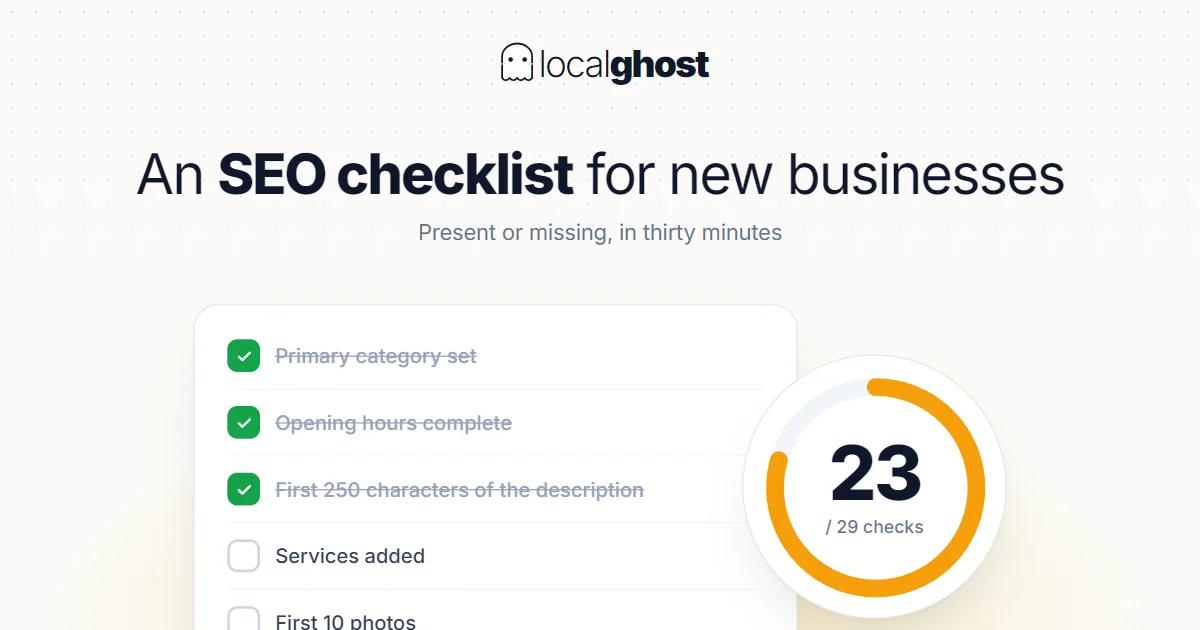
Profile completeness. A field left blank is a question left unanswered. Hours, attributes, description: 10 golden rules.
The description. Saying what you do in the first sentence: how to write the description.
The one thing not to do on relevance: adding keywords to the business name. That breaches the naming rules and is open to correction.
What genuinely works on the prominence side
Prominence accumulates over time; it does not get built inside one week.
Review flow. Continuity and recency matter as much as count. A batch every three months is weaker than a few every week: strategies for increasing reviews.
Replying to reviews. Reply rate and speed also signal something to whoever is reading: review response templates.
Information consistency. Address, phone and name identical everywhere. A conflict weakens the prominence signal: NAP consistency.
Listings on priority sources. Not hundreds of directories, a handful of important ones: what local citations are.
Photo flow. The date of the newest photo carries more meaning than the total count: photo optimization.
Relevance on the site side. Service pages support the profile: website SEO for local businesses.
The map pack and organic results are not the same race
Two separate surfaces get conflated, and conflating them sends effort to the wrong work.
The map pack. The block arriving with a map, usually showing three businesses. The entity competing here is the profile. Order is computed through relevance, distance and prominence.
Organic results. The classic blue links. The entity competing here is the page. The criteria differ: how well content answers the query, the site as a whole, links.
Appearing on both at once is possible and is the ideal. But the work differs: the profile for the map, the page for organic.
Two practical consequences follow. First, improving site speed does not change map ranking. Second, adding more photos to the profile does not change organic ranking.
There is a third surface too: "near me" style searches resolve almost entirely on the map side, and that demand never appears in site reports. Low site numbers alongside strong profile numbers is not a contradiction: reading the statistics.
Why do I appear for a query sometimes and not others
This is the observation that causes the most anxiety, and it is usually not a fault.
Because position is computed from the searcher's exact location, a few hundred metres of movement can change the result. Appearing when you check from your own premises and not appearing from two streets away is normal.
Results are also sensitive to the exact wording of the query: "dentist" and "dental clinic" can return different lists. Which is why knowing the phrase people search matters: local keyword research.
The symptom of a genuine problem looks different: disappearing consistently, from every point and every query. In that case the places to look are category, information consistency, and whether the profile has been suspended.
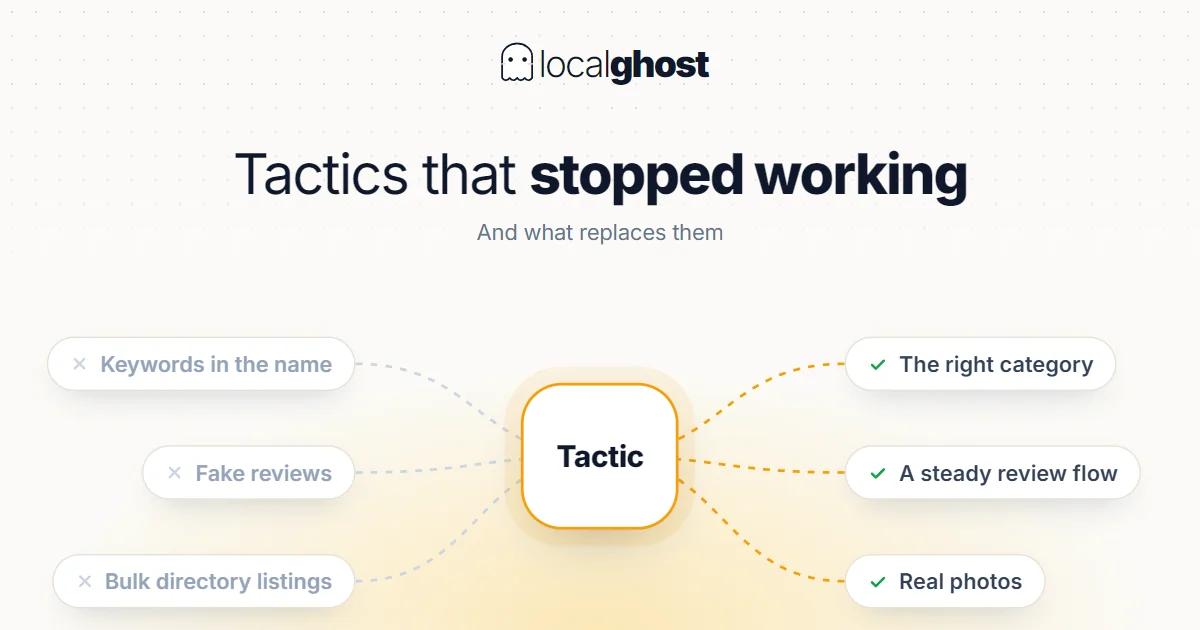
Tactics that do not work, and are risky
This list covers most of what gets sold under a "number one" promise.
Adding keywords to the name. Against the naming rules. Even where a short-term effect appears, it is open to correction and puts the profile at risk.
Buying reviews or collecting them with incentives. Against policy; reviews can be removed and the accumulation resets. Reviews piled into a short window also create an unnatural pattern.
Fake listings or addresses that do not exist. Caught at verification and can escalate to losing the profile.
Declaring a wide service area. A declared area does not change the distance input. Writing a large area is not buying a radius: home-based service businesses.
Spinning a page per neighbourhood from the same text. The pages weaken one another.
Calculating keyword density. It damages readability and returns nothing.
On tagging photos with location data, the honest answer is that the evidence is contested: independent tests have not shown a consistent effect, and location data in uploaded images is generally not retained. Treat sources that state this confidently with caution.
Measuring ranking properly
Because there is no single position, the measurement cannot be a single number either.
The method that works: fix your points and fix your queries, then repeat the same measurement at regular intervals. Three to five points is enough — say the centre, two neighbouring districts, and one more distant area you are targeting.
What you record is not a one-off position but the change. One measurement says nothing; a three-month series from the same point does.
There are two common measurement mistakes. First, checking from your own phone: you are signed in, located at your business, and carrying search history — what you see is not what a customer sees. Second, checking daily: daily fluctuation is noise, not signal.
For method detail and competitor comparison: how to track rankings and how to do competitor analysis.
A realistic timeline
This heading produces the most disappointment, so it needs stating plainly.
Fixing profile information — category, hours, description, services — is fast work and its effect appears relatively early. That is the first list.
The prominence side is slow. Review accumulation, consistent information and photo flow build over time. A newly opened business sitting behind in its first months is not a fault, it is accumulation that has not happened yet: 30-day plan for a new business.
Distance does not change. If your competitor is closer to the searcher, there is no setting that beats them on that particular search. Accepting this sends your energy to reachable targets.
The working style that follows is a routine rather than a campaign: weekly maintenance calendar.
Frequently asked questions
Can I rank number one on Google Maps? There is no single number one that holds for everyone. Results are computed by the searcher's location; two people on the same street can see different orders. The measurable goal is visibility for specific queries from specific points.
Which factors does Google name? Relevance, distance and prominence. You cannot change distance; relevance and prominence are what you work on.
Which work produces the fastest effect? Fixing profile information: the right primary category, complete details, accurate hours and a clear description.
If I declare a wide service area, will I appear across a wider area? No. A declared area does not change the distance input.
Does buying reviews work? No, and it is risky. It breaches policy, reviews can be removed, and the accumulation resets.
How should I measure my ranking? From fixed points, with fixed queries, at regular intervals. Checking from your own phone misleads; checking daily measures noise.
Written by
Localghost Team
Related tools: Grid rank tracking · AI review responses · All local SEO tools